
FULFILLMENT STRATEGY / 7 MIN READ
Shopify Bundle Inventory: How Many Sets Can Your China 3PL Actually Pack?
Shopify can show ten sets in stock while your warehouse can pack only three. Compare bundle availability and actual packing capacity, then use a mixed order to verify the handoff.
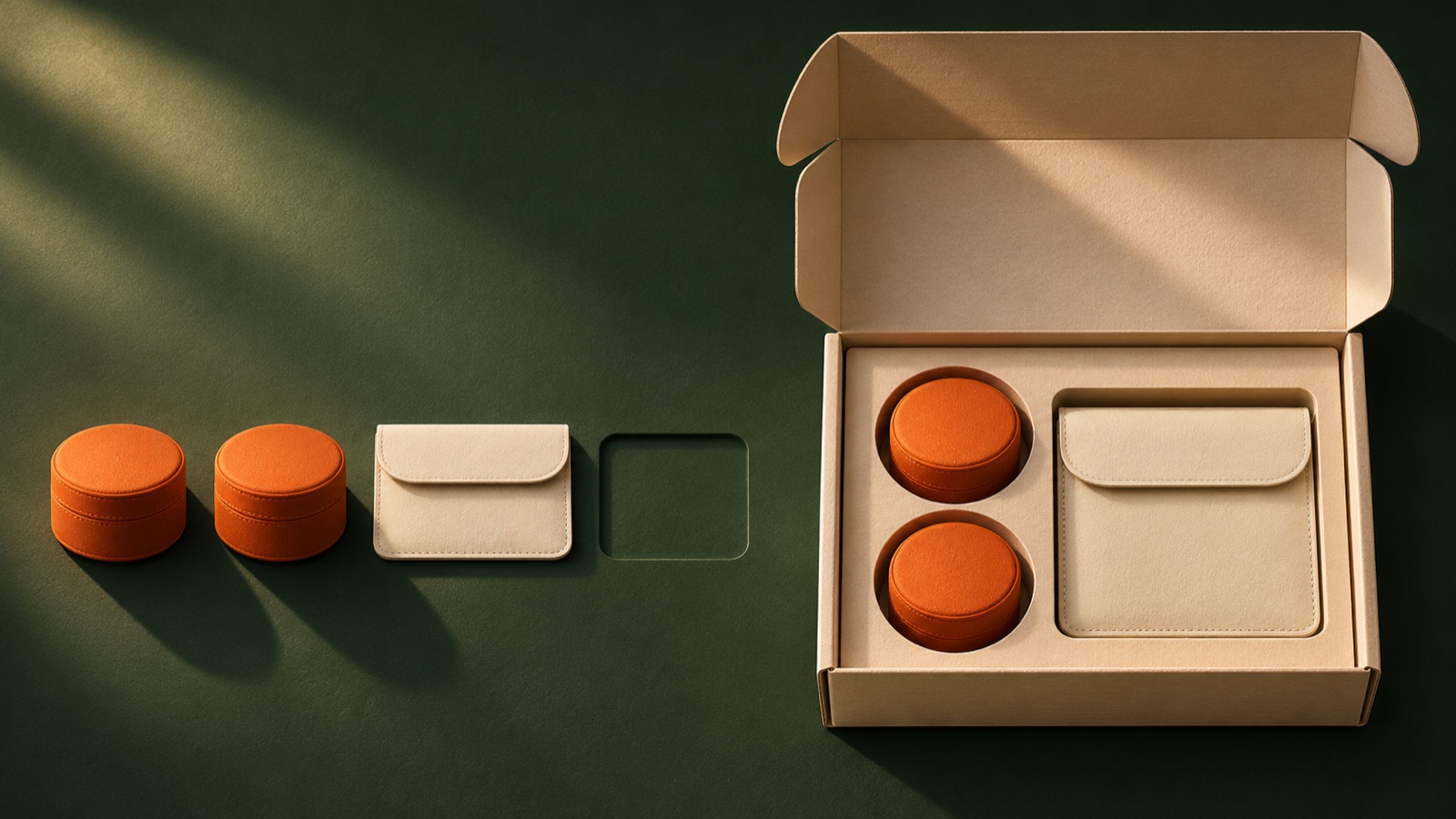
A Shopify bundle can show plenty of available units while your fulfillment team still cannot pack a single complete set at the assigned warehouse. The storefront counts what its inventory rules allow it to sell. Your China 3PL needs the exact variants, quantities and packing materials in the place where the order will be picked. Those counts are easiest to align before the bundle goes live.
This guide covers fixed sets built with Shopify Bundles and physical kits tracked as finished goods. Use the example to check your own stock, then test the order handoff with your warehouse before promoting the set.
Calculate Shopify bundle inventory from the tightest component
For a fixed bundle with tracked components, take each component variant's Available quantity, divide by the number of units required per set, round down, and take the smallest result. Variant quantities matter: eight black pouches cannot fill a bundle that specifies a beige pouch without an approved substitution. The relevant inventory is Available, which excludes units already committed to orders and units held as unavailable. Shopify bundle inventory rules · Shopify inventory states
Shopify skips components that are untracked or set to continue selling when out of stock in its bundle quantity calculation. Review either setting component by component. If an untracked insert, pouch or gift box is mandatory for your offer, the warehouse still needs a count or a documented release rule. Until it does, a positive bundle quantity does not confirm that orders can go out as promised.
Check how many complete sets each warehouse can pack
Here is a hypothetical starter set with two cases and one pouch. The snapshot assumes both locations have usable, uncommitted inventory and ignores packaging for the moment.
- Warehouse A: 16 cases and 3 pouches support min(16 ÷ 2, 3) = 3 sets.
- Warehouse B: 4 cases and 11 pouches support min(4 ÷ 2, 11) = 2 sets.
- Combined inventory: 20 cases and 14 pouches support a pooled calculation of min(20 ÷ 2, 14) = 10 sets.
Without moving stock between warehouses, those locations can make 5 complete sets in total. If all orders for this offer are routed to warehouse A, its capacity is 3 before packaging. If A also has only two approved gift boxes, its capacity for the advertised gift set is 2. Compare those numbers at the same timestamp. The arithmetic describes manufacturing and packing feasibility; it does not model every checkout or routing scenario.
The first-party Shopify Bundles app calculates its bundle inventory against overall stock. Shopify separately uses available inventory and your routing rules to assign online orders to locations. Check which actual locations receive the component lines and whether the order can arrive in one parcel. A transfer may enable more sets, but wait until the destination receives and releases the components before treating them as ready to pack. Shopify Bundles app limits · Shopify location fulfillment
Choose when the warehouse builds the kit
Build after the order if variants change often, demand is uncertain, or you also sell components individually. In this workflow, the 3PL reserves and picks the component quantities, follows the packing instructions, and records what shipped against the appropriate fulfillment lines. Stock remains available to other offers until allocated. The job takes more coordination at the packing bench, especially if a component is shared across several offers.
Prepack as a finished SKU if you repeatedly ship the same configuration, need a sealed gift presentation, or want the warehouse to verify the set before a launch. Treat this as a separate, agreed inventory workflow. The warehouse posts component consumption when it builds the kit, releases finished stock after inspection, and consumes the finished kit when it ships. The store and the 3PL must explicitly agree on which sellable SKU drives that finished stock. The Shopify Bundles app lists component SKUs on orders, so never assume a connector will turn those lines into one finished-kit pick automatically.
Set a cutoff for switching flows. For example, before approving a batch of 30 prepacked kits, agree who posts the component adjustment, when the 30 kits become sellable, and what happens if three fail inspection. If 27 pass, release 27. Quarantine the other three until rework or disassembly is recorded. Reconcile the standalone component offers at the same time so the same physical stock does not appear in both pools.
Prove the order mapping with a mixed basket
Shopify shows a bundle as a group in some order views and may surface the component lines separately for split fulfillment, returns or exchanges. For integrations using the Admin GraphQL API, a component line can reference a line-item group. The underlying group and the fulfillment work assigned to a specific location are different pieces of data. Ask your connector or warehouse to show the actual import. Bundle displays and fulfillment considerations · Shopify line-item group · Fulfillment order line item
Place a controlled test order with one starter set and one loose case of the same SKU. Then verify:
- The inventory records account for three cases and one pouch. The warehouse can identify which two cases belong inside the set and which case is the loose line.
- The 3PL receives one complete order with the correct route and destination, or flags the case where a split would break your packing promise.
- The pick list and pack instructions identify the bundle variant, required packaging, and any permitted substitution. A warehouse operator knows who decides whether to hold a short order.
- The warehouse sends tracking against the intended fulfillment lines and quantities. The team checks the remaining quantity after a test partial fulfillment and agrees what changes in a cancellation or return.
- Packed dimensions and weight are checked against the actual carton. Shopify Bundles derives product weight from the individual items. Ask for a finished parcel measurement when the carton, dividers or insert materially affect the shipping quote. Shopify Bundles order processing
If the connector drops the group and the warehouse cannot distinguish otherwise identical component lines, hold the launch. Agree on a reliable mapping or a finished SKU workflow, then rerun the test.
Copyable bundle packing brief for a China 3PL
Use one brief per bundle version. Keep the buyer-facing configuration and the stock convention together.
- Store product, variant and bundle reference: ___
- Component variant IDs and SKUs, quantity of each, permitted substitutes: ___
- Build on order or prepack as finished SKU, and where stock changes are recorded: ___
- Shipping locations allowed, one-parcel requirement, exception owner: ___
- Packaging SKU and version, orientation, insert and scan points: ___
- What to do if any component or package is short: ___
- Which lines and quantities to confirm, how to record a return or rework: ___
- Test order ID and final packed dimensions and weight: ___
Start with one complete test at the warehouse that will actually ship the offer. If you are changing product codes at the same time, use the SKU and barcode mapping checklist. For orders that might travel separately, see the partial fulfillment guide. If you are assessing China 3PL services, share one bundle bill of materials and your target packing result via the contact page.